Advancing Women in STEM Community Leaders Forum and Strategic Recommendations
The Advancing Women in STEM Community Leader’s Forum, held on on January 29, 2018 in Montreal, was designed to harness the vast knowledge and experience of 60 leaders from the STEM, business, legal and academic sectors in order to generate practical recommendations and solutions to the following four key challenges facing women in the STEM industry:
Challenge 1: The STEM industry environment
Challenge 2: Conscious and unconscious bias against women in STEM
Challenge 3: Barriers to the path of leadership
Challenge 4: Top-down systems of advancement and support
This gender equality training tool is designed to stimulate investment in the gender equality skills of policymakers and public administration employees and to facilitate the process of designing effective gender equality training. The guidelines provide a set of standards to commission effective gender equality training. Whereas previous studies focus on the content of gender equality training or the profile of gender equality trainers, these guidelines consider the specific role and needs of commissioning authorities at different stages of the gender competence development process.
GEM is a guide to integrating a gender analysis into evaluations of initiatives that use Information and Communication Technologies (ICTs) for social change.
GEM provides a means for determining whether ICTs are really improving women’s lives and gender relations as well as promoting positive change at the individual, institutional, community and broader social levels.
Women hold just under 1 in 6 board seats, report finds
A new report says just five per cent of Canadian technology companies have a female founder and a similar fraction have a woman as CEO, suggesting the industry’s gender diversity is lagging other sectors.
The study, co-authored by PwC, the MaRS Discovery district and non-profit MoveTheDial, also indicates that women comprise 13 per cent of the average Canadian tech company’s executive team while 53 per cent of firms do not have any female executives.
Despite women’s impressive gains in education and the workplace over the past 50 years, men greatly outnumber women in leadership, especially in top positions. Barriers and Bias: The Status of Women in Leadership delves into the reasons for these leadership gaps and proposes concrete steps for narrowing and, ultimately, eliminating them.
There is strong evidence that organizations with gender diverse boards and senior leadership are more likely than their counterparts to yield stronger financial results in the long term, and to enjoy a more positive and empowering organizational culture.
This Playbook serves as a thought-starter and provides practical tools for action that result in improved gender balance on boards.
Strategies for cultivating confident women leaders
The Anita Borg Institute has researched, curated, and developed strategies proven to help organizations advance women technologists into positions of leadership and influence.
This paper outlines these strategies and offers recommendations for achieving results.
New research has some answers — and what we can do about it.
Nobody was going to stop her. Nobody. Certainly not the other students who might make fun of her for raising her hand in class, repeatedly, to ask questions. It was eighth-grade math, and it was hard. She asked the teacher a question. And then another. And then another. Every class, the drill was the same: Wash, rinse, repeat.
Microsoft CFO Amy Hood speaks to female students at Franklin High in Seattle on International Women’s Day, Thursday, March 8, 2018.
(Photo by Dan DeLong)
“People used to even make jokes about me because I asked so many questions,” says Kennedy Sampson, now a high school junior in Maryland. “But I needed to understand it …I had to do what I had to.”
Kennedy’s determination and grit makes her a good candidate to succeed in math.
Her voice was among more than 6,000 U.S. girls and women from ages 10 to 30 who were interviewed for a newly released study about STEM (science, technology, engineering and math) education. The study, done by Microsoft in partnership with KRC Research, finds that despite the high priority that is placed on STEM in schools, efforts to expand female interest and employment in STEM and computer science are not working as well as intended. This is especially true in technology and engineering.
While the U.S. Bureau of Labor Statistics predicts that technology professionals will experience the highest growth in job numbers between now and 2030, only a fraction of girls and women are likely to pursue degrees that enable them to fulfill these news jobs.
Inspirational sticky notes found at Microsoft Studio C were started by Jamie Cabaccang, a senior design lead, to help women on her team feel a sense of community. They began to spread across Microsoft’s Redmond campus quickly this week.
The reasons range from peer pressure, to a lack of role models and support from parents as well as teachers, to a general misperception of what STEM careers look like in the real world. But the research also points to ways to better support girls and young women in STEM. Those include:
Providing teachers with more engaging and relatable STEM curriculum, such as 3D and hands-on projects, the kinds of activities that have proven to help retain girls’ interest in STEM over the long haul. (“My teacher’s making me build a rocket ship with some other students, so that got me interested in STEM a little bit because I like to build and create,” says one middle-school girl interviewed for the study).
Increasing the number of STEM mentors and role models – including parents – to help build young girls’ confidence that they can succeed in STEM. Girls who are encouraged by their parents are twice as likely to stay in STEM, and in some areas like computer science, dads can have a greater influence on their daughters than moms, yet are less likely than mothers to talk to their daughters about STEM, the study found. (“I grew up with my mom always encouraging me to learn more, an engineer dad and a chemist grandpa, both of whom were always excited to answer my questions, support and teach me,” says a 27-year-old woman interviewed for the study.)
Creating inclusive classrooms and workplaces that value female opinions. It’s important to celebrate the stories of women who are in STEM right now, today. (“It’d be really cool to see women in STEM careers on posters in the hall, in our history and science texts, and visit our classes,” says a 14-year-old girl who is in eighth grade. “I don’t know what to focus on. But my tests say I’m a good engineer and I wish I knew what that looked like in real life.”)
Although a college professor tried to discourage her from pursuing a career in engineering, and there were other stumbling blocks along the way, Peggy Johnson says her mother encouraged her to “stick with it” during the “challenging ups and downs of pursuing my engineering degree.”
Peggy Johnson, an engineer who is now Microsoft’s executive vice president of business development, didn’t know what being an engineer looked like – until she got to college. She began college as a business major. She was a freshman, doing a job delivering campus mail, when she took some packages to the engineering department – and everything changed.
“The two ladies behind the desk there got super-excited when they saw a woman walking in, because they thought I was going to ask questions about engineering, but I wasn’t,” Johnson says. “I was just delivering the mail, I couldn’t understand their excitement. And they talked to me about engineering, opening up the world of what an engineering degree could do for me. They said in engineering, you can work on the world’s biggest problems and help solve for them.”
That evening, Johnson thought about what the women had said. The very next day she changed her major to engineering.
Her parents backed her choice. “It was really my mom, who had grown up in a different time, when many women didn’t go to college, who said, ‘I think it’s going to be a fantastic career for you!’ because she’d seen me love math and science all those years.”
Her mother encouraged her to “stick with it,” during the “challenging ups and downs of pursuing my engineering degree,” Johnson says. The “downs” included a professor who tried to discourage her from continuing on in her major.
“I was an electrical engineering major, but I had to take a few classes in mechanical engineering. For whatever reason, I wasn’t as skilled in that field, so I struggled. I went to talk to the professor several times. And he said, ‘I just don’t think this is the right degree for you.’”
He “almost convinced me,” she says. But her mother told her differently, yet again. “I know you’ll stick with it” – and Johnson did.
Franklin High students Jill Kumasaka, center, and Julie Pham, right, laugh as Microsoft CFO Amy Hood speaks to female students at the Seattle school on International Women’s Day, Thursday, March 8, 2018. (Photo by Dan DeLong)
Sticking with it is something girls need to be encouraged to learn, says Reshma Saujani, founder and CEO of Girls Who Code, whose mission is to close the gender gap in technology. It is among the many STEM nonprofits supported by Microsoft Philanthropies.
“We have to rethink the way we raise our girls,” Saujani says. “Boys are pushed to take risks; girls are not. In fact, they feel like they have to be perfect at everything they do; they see getting a ‘B’ in math class as bad.
“We have to teach girls to be imperfect.”
When it comes to computer science, “The process of learning how to code is learning how to fail,” Saujani says. “We need to teach girls that it is all right to sit with that discomfort of not knowing the right answer right away.”
She also emphasizes how important it is to have a dad that “doesn’t coddle you, that encourages you to try new things. You have to inspire girls to try things that they may not be good at,” she says.
John Sheehan, a Microsoft Distinguished Engineer, says he has always encouraged his daughter Kaley’s interest in math. Sheehan volunteers and mentors other girls to pursue STEM educations. (Photo courtesy of John Sheehan)
John Sheehan’s daughter has always been good at math, but even so, he saw her being discouraged in classes, albeit it indirectly.
“I used to go to her schools, for the parent-for-the-day activities, and I remember math teachers praising the boys” regularly, but the girls – not so much.
That wasn’t acceptable to Sheehan, a Microsoft distinguished engineer. While his daughter didn’t say she felt disheartened, at times he sensed she was.
“She’d say, ‘Oh, this math is hard,’ and I’d say, ‘Yeah it’s hard for everybody – but you can do it.’ There was this sort of underlying feeling society was telling her that boys are better at math. It made her think when she had trouble with some particular topic, it might have something to do with the fact that she was a girl. My job as a parent was to dispel that belief.”
Sheehan is among the Microsoft employees who volunteer to educate girls about computer science and STEM. He also started a fund for girls and STEM at his alma mater in Boston.
“It’s critical to mentor girls from classroom to the boardroom, across the full career continuum in STEM,” says Toni Townes-Whitley, Microsoft corporate vice president for industry.
Toni Townes-Whitley, Microsoft corporate vice president for industry, had a similar experience in school, like Johnson and Sheehan’s daughter. A high school chemistry teacher of hers was “partial to my male counterparts,” and “did not encourage girls to pursue ‘hard’ sciences.”
Townes-Whitley did not let it stop her.
“Once I recognized the bias, I made it a point to connect with the other female students, study together and outperform collectively in the class,” she says.
That spirit of determination continues in her current role. “It’s critical to mentor girls from classroom to the boardroom, across the full career continuum in STEM,” she says. “The research has indicated that there are ‘off ramps’ at different educational levels where girls leave STEM programs throughout middle school, high school and undergraduate” in college.
“It’s important to encourage, inspire and support to stay the course, and present STEM careers differently.”
Mary Snapp, corporate vice president and head of Microsoft Philanthropies, agrees. “Unless things change much faster, many in this bright, hopeful generation will not enter these fields,” she wrote in a recent post. “These are among the reasons Microsoft Philanthropies provides grants to nonprofits that prioritize increasing diversity in computer science, and more than half of beneficiaries are female.”
Snapp adds that Microsoft commissioned the research to better understand what causes girls and young women to disengage from STEM studies, what can be done to fix the problem and to share those learnings with others.
Helen Chiang, general manager of Minecraft Franchise, says both her parents encouraged her early interest in STEM. When she was in middle school, her mother drove her to the local high school “each day so I could take upper-level math and science with the high schoolers.”
When Chiang wasn’t feeling challenged enough in her regular high school curriculum – and was “considered an oddball/nerd/geek by the rest of the class because I excelled in math and science” – her parents stepped in yet again.
“They supported my passion and interests by finding me a math and science high school program so I could learn and be challenged in an environment with other kids like me,” she says, noting: “It’s incredibly hard to be an outlier, especially during the teenage years.
“Learning in a community of peers that had similar interests kept me from leaving STEM early because it wasn’t considered popular in my regular high school.”
“I have two young daughters, so I am incredibly motivated to ensure they grow up in a world where they can grow up to be anything they want to be,” says Helen Chiang, general manager of Minecraft Franchise. “I hope they never run into some of the situations I have faced.”
Chiang says where she grew up, “It wasn’t popular for girls to be smart or interested in challenging subjects within STEM. I went through a period of wondering whether I should pretend to not understand subjects, or dumb myself down so that I would be liked. I have to credit my parents, who reinforced in me from an early age that it’s much more important to always be curious, always be learning and continue to challenge yourself – than to want to be liked. Friends and popularity come and fade, but what’s in your brain should stay with you a lifetime.”
Peggy Johnson can vouch for that. After she graduated college, she went on a job interview with a company that was based in another country.
“I don’t think they knew that Peggy was a female name,” she says. “And I walked in the door, and I sat down, and the interviewer looked at me and said, ‘Oh, why are you here?’ I said, ‘You posted this engineering job.’ And he said, ‘Oh, we don’t hire female engineers.’ And then he got up and left.”
Johnson remembers looking at the walls around her and thinking, “Well, I guess this interview is over.”
She picked up her resume and walked out, not letting that setback defeat her. Soon, that company’s loss would be Qualcomm’s, and later, Microsoft’s gain. And in 2017, Johnson was ranked No. 1 as the most powerful female engineer in the U.S. by Business Insider.
Lead Photo: Student Jill Kumasaka talks about STEM issues during a Franklin High School session with other female students, where Microsoft CFO Amy Hood spoke on International Women’s Day, March 8, 2018. (Photo by Dan DeLong)
Mary Snapp, corporate vice president and head of Microsoft Philanthropies, agrees. “Unless things change much faster, many in this bright, hopeful generation will not enter these fields,” she wrote in a recent post. “These are among the reasons Microsoft Philanthropies provides grants to nonprofits that prioritize increasing diversity in computer science, and more than half of beneficiaries are female.”
Snapp adds that Microsoft commissioned the research to better understand what causes girls and young women to disengage from STEM studies, what can be done to fix the problem and to share those learnings with others.
Helen Chiang, general manager of Minecraft Franchise, says both her parents encouraged her early interest in STEM. When she was in middle school, her mother drove her to the local high school “each day so I could take upper-level math and science with the high schoolers.”
When Chiang wasn’t feeling challenged enough in her regular high school curriculum – and was “considered an oddball/nerd/geek by the rest of the class because I excelled in math and science” – her parents stepped in yet again.
“They supported my passion and interests by finding me a math and science high school program so I could learn and be challenged in an environment with other kids like me,” she says, noting: “It’s incredibly hard to be an outlier, especially during the teenage years.
“Learning in a community of peers that had similar interests kept me from leaving STEM early because it wasn’t considered popular in my regular high school
Many companies continue to struggle with advancing and retaining women. One company, BCG, discovered that the gender disparities in their senior cohorts were not completely explained by traditional concerns such as work-life balance or differential ambitions. Instead, they identified a very different explanation: the quality of the day-to-day apprenticeship experience. Apprenticeship – the working relationships of junior team members learning alongside experienced colleagues – is how employees develop critical skills and leadership capabilities. With this insight, they launched a new program to focus on stronger work relationships, strengths-based development, and coaching for a range of communication styles. Five years into it, their promotion rates for women have increased by 22 percentage points among senior managers; the retention of women in mid-career levels is now at parity with that of men; and satisfaction with BCG’s efforts to retain women has increased by 20 percentage points for all women and by 30 percentage points for senior women. Based on these results, they recommend three actions for any company talent-driven company: Embed apprenticeship into the delivery of core products and services; prioritize and monitor relationships at work; and encourage diverse strengths and styles.
Many companies continue to struggle with advancing and retaining women. As we’ve studied our own progress at BCG, we have found that gender disparities in our senior cohorts are not completely explained by traditional workplace concerns, such as work-life balance, maternity leave, unequal pay, and differential ambitions. We have identified a very different explanation, which is just as critical: the quality of the day-to-day apprenticeship experience.
Apprenticeship, the working relationships of junior team members learning alongside experienced colleagues, is critical to mastering the consulting craft and succeeding in professional services. It’s a model that’s increasingly used in companies of all kinds looking to accelerate the development of their high-potential people. Management consulting is a challenging environment in which to cultivate apprenticeship, because staff regularly jump from project to project and manager to manager. As in many fast-paced companies today, consulting staff operate without formal job descriptions or handbooks. So relationships are where employees develop critical skills and leadership capabilities.
However, when we analyzed the annual employee survey data specifically for high-potential, mid-career women who regrettably left the firm, we found the lowest scores were around the statement “I am satisfied with the apprenticeship and feedback I received.” Moreover, in a survey of employees leaving BCG, departing women ranked mentorship, not work-life balance, as the number one topic that the firm needs to improve on. Finally, in a survey of all North American staff, asking about 16 options of what people seek from a manager, “forming a strong relationship with my manager(s)” and “having someone in leadership who cares about me and reached out long after the project ended” were the most valued dimensions for women.
Equipped with this data, BCG teamed with leadership development consultancy BRANDspeak to launch a bold transformation across North America: Apprenticeship-in-Action (AiA). The AiA program focuses on the three components of apprenticeship that drive satisfaction and retention: relational connectedness, strengths-based development, and coaching for a range of effective communication styles — levers that are relevant to any manager who strives to get the best from individuals and teams.
Five years into the journey, we have seen remarkable improvements. Female promotion rates have increased nationwide across all cohorts, with a 22-percentage-point rise among senior managers, while the attrition of senior women has slowed by five percentage points. Retention of women in mid-career levels is now at parity with that of men. Satisfaction with BCG’s efforts to retain women has increased by 20 percentage points for all women and by 30 percentage points for senior women.
While it would be difficult to attribute all of this improvement directly to AiA, we believe it is a clear driver. Here’s why.
Improving Connectedness
Our research found that both genders, but particularly women, viewed many work relationships as transactional. To remedy this, AiA equipped managers to be more deliberate about investing in relationships, focusing on four elements: (1) making personal connections, (2) investing in individuals’ success, (3) guiding and advising, and (4) staying in touch between projects. We gave tactical suggestions for how managers could do this (e.g., use travel time to connect with team members and establish an open-door policy). We also reinforced connections through mentorship and sponsorships.
Since the program’s rollout, the firm has seen a nine-point improvement across both genders for those who report having a manager that proactively coached and developed them in their first year. One male partner shared that he now tracks check-ins with teammates on his to-do list and spends time “making sure they are meaningful conversations.” A female partner commented, “Now I’m vocal about the importance of having a personal connection, and someone who is invested in and is watching out for you.”
Using Strengths-Based Development
Our research showed that 63% of BCG staff across all levels and genders felt that our feedback focused too heavily on areas for development.
To address that, AiA introduced training and tools to enable managers to ground personal development in an individual’s differentiating strengths by creating a strengths inventory and linking each strength to a specific area for development. This allows people to leverage their strengths to accelerate improvement. For example, instead of telling someone who is quiet that they need to speak up in meetings, we may highlight their ability to extract insights out of analysis and suggest they think about what insights to share at the next meeting. This linkage has enabled a powerful transformation in the way managers and advisors give feedback and coach. One female consultant reflected that “understanding how my core strengths can help me to address my development areas and propel me forward in my career is much more helpful than focusing solely on where I need to improve.”
Training around leveraging strengths has contributed to an 18-percentage-point drop in the number of senior managers who think that feedback centers excessively on development areas. One male senior partner said, “Personally, I had my own philosophy about how to give feedback, but AiA has evolved it.” The female senior partner who leads the firm’s career development process commented, “We’ve introduced an entirely new vocabulary into our apprenticeship model. Our old rubric was that you’re ‘missing something.’ Now we’re looking for linkages between strengths and development areas, and all our written and verbal communication reflects that.”
Acknowledging a Range of Effective Communication Styles
As with many workplaces, BCG has traditionally operated according to male communication norms. Before AiA, women reported receiving feedback from managers to “be more aggressive” or “take up more space,” advice viewed by many women as ineffective or inauthentic (among other reasons, it’s difficult for a five-foot-tall woman to internalize how to take up space). BCG recognized that many talented leaders, particularly women, have strong communication skills that differ from the dominant style. The most effective communicators span a range of styles and tailor their approach to fit the audience.
AiA acknowledges the importance of communication range and has pioneered a new, comprehensive training, which includes coaching around “building rapport” and “reading the room.” More women and men now see a range of styles as being necessary to navigate diverse situations. Coaching helps individuals identify where they have gaps in their range and develop new skills. For example, while coaching previously focused on delivering tough messages and landing a point of view, today we are focused on facilitating two-way dialogues and building connectivity. This portion of the program is in the early stages, but the firm has already seen an eight-percentage-point decrease in the number of people who report that their own communication style is different from that of successful BCG employees. One male partner noted, “I’m much more careful of not trying to force-fit everyone to be like me.” Similarly, a female partner reflected, “Before AiA, the fights in career reviews were insane. Now I hear, ‘She needs to be more aggressive,’ and I hit the pause button and ask the room, ‘What if she doesn’t want to be more aggressive?’”
Reflecting on our five-year journey and the results we have achieved, we recommend three actions for any company in which talent management defines competitive advantage:
Embed apprenticeship into the delivery of core products and services. Identify a model that develops the talent you need and resonates with the diverse set of individuals you employ, and embed it: Make it part of training, professional development, the way managers are coached and evaluated. Monitor the impact — are your employees more satisfied on key dimensions? Are you retaining more top talent? As a leadership team, take ownership for addressing individuals and behaviors that don’t meet the target model.
Prioritize and monitor relationships. Build opportunities for relationships to develop and flourish. Incentivize leadership to invest in relationships and monitor their effectiveness. For high-performing talent and underrepresented groups, ensure they have performance-enhancing relationships at all levels. Collect information from individuals on which work relationships they consider their strongest, so you make sure there is someone who is supporting key talent.
Encourage diverse strengths and styles. A lot of organizations state that they want people with diverse backgrounds on their teams — but then coach people to behave uniformly. A truly diverse organization that reaps the benefits of diversity, better serving customers or clients in different situations, needs to value a range of communication and working styles. Feedback needs to build on the differentiating strengths of the individual, rather than their weaknesses.
BCG is in the process of implementing the AiA model beyond North America, aspiring to a global rollout. We also have plans to introduce AiA to other companies through our client work. And while originally designed with a gender focus, the program has benefited both men and women, with broader applicability to other diversity networks, including ethnic diversity, LGBT employees, and veterans.
We recognize that we have further to go before we reach our ambition of gender parity. Nonetheless, our experimentation offers a rare example of long-term progress on diversity goals. Results to date make us optimistic that transforming the day-to-day apprenticeship experience is fundamental to improving the satisfaction, retention, and advancement of our diverse workforce.





















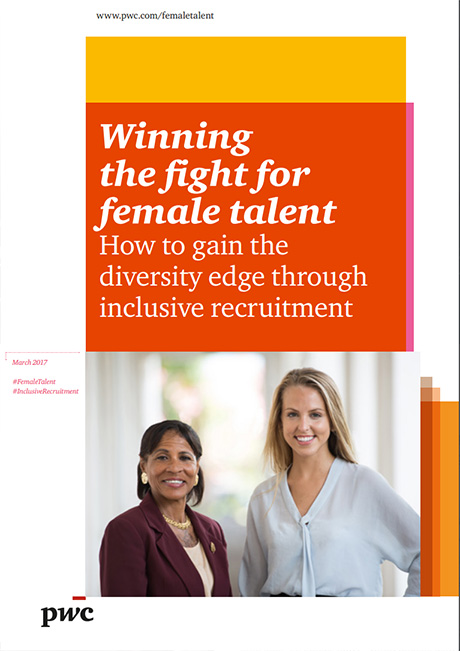

The study, co-authored by PwC, the MaRS Discovery district and non-profit MoveTheDial, also indicates that women comprise 13 per cent of the average Canadian tech company’s executive team while 53 per cent of firms do not have any female executives.